Chattahoochee Corridor Building Rules: What Sandy Springs Buyers Should Know
October 1, 2026
October 1, 2026
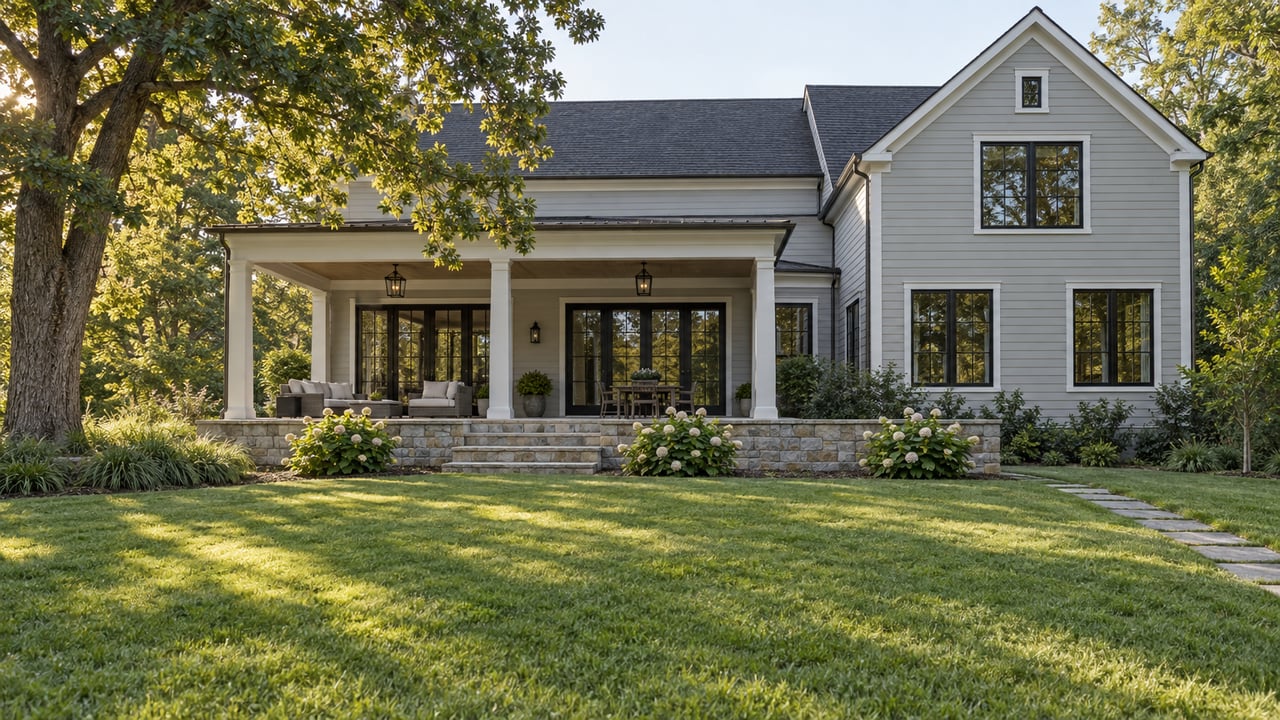
A buyer touring a home on Riverside Drive or along Heards Ferry Road often falls for the same thing: a wide, wooded lot that runs down toward the Chattahoochee, with just enough flat ground to picture a pool, a screened porch, or a two-story addition. What that buyer usually doesn't picture is a possible referral to a regional commission in Georgia's capital, which can comment on how close to the water any of it can sit.
in Sandy Springs, a surprising share of the city's most desirable river-adjacent neighborhoods fall inside it.
Georgia's Metropolitan River Protection Act draws a 2,000-foot line along both banks of the Chattahoochee, and any property inside that line answers to state review in addition to city permitting. Sandy Springs enforces the rules directly, and the city's own river corridor page lays out what actually restricts construction inside that boundary: a 50-foot undisturbed buffer measured from the riverbank, and a separate 150-foot impervious surface setback that limits where concrete, pavers, and buildings can go.
Those three numbers don't work as a single flat rule. They stack, and they're all measured from the water's edge rather than from the property line. A five-acre lot with a house sited close to the bank can end up with far less usable land than a smaller lot set well back from the river, even on the same street. Neighborhoods like Riverside, Huntcliff, North Riverside, North Harbor, and Riverside Estates all sit inside this overlay, and the amount of buildable ground behind any given house depends on exactly where that house happens to sit relative to the bank, not on the acreage in the listing.
| Distance from riverbank | What it restricts |
|---|---|
| 50 feet | Undisturbed vegetative buffer, no grading or clearing |
| 150 feet | Impervious surface setback, limits concrete, pavers, structures |
| 2,000 feet | Outer edge of the regulated corridor itself |
According to the city's Streams and Creeks page, a separate 75-foot stream buffer also applies to any tributary creek that feeds the river, which matters because Sandy Springs takes its name from the springs and streams that run through it before reaching the Chattahoochee.
As Appen Media reported, the clearest recent illustration of how these numbers play out on an actual parcel is a property at 9755 Roberts Drive, a 1.7-acre single-family lot abutting Roswell Road near the river. The site carried a rezoning history stretching back more than two decades, and when a development team returned to the Sandy Springs City Council in September 2025 with a plan to subdivide it into three residential lots, the math around the 150-foot setback became the whole conversation.
Brad Riffel, a principal with the design firm representing the property, told the council the team had limited room to work with, saying they were "trying to create some marketability and value on a property" given how little buildable land the site offered once the setback was applied. Because the existing development pattern left so little usable ground outside the protected zone, the plan ultimately included an encroachment into the 150-foot setback, avoiding a redesign that likely wasn't possible on that footprint.
The council ultimately voted to keep the property's zoning residential, subdividing it into three lots instead of approving a denser or commercial use. Don Huffner, a Roberts Drive resident living near the property, described the outcome as protecting "what we value most, our homes and our neighborhood."
The lesson for a buyer isn't about that specific parcel. It's that a design firm with river-corridor experience still had to account for an encroachment into the 150-foot setback to make a modest three-lot plan pencil out. If a professional team can hit that wall, an individual homeowner planning an addition or a pool on a river lot should assume the same math applies before making assumptions about what's possible.
Site Plan Creator says projects in the corridor typically require a pre-application meeting before permits can be pulled.
Septic systems are barred entirely from both the river buffer and the stream buffer setback, which matters on the older Riverside-area lots from the 1960s and 1970s that predate the current sewer network. The process takes real weeks, not a single afternoon at the counter.
For a buyer writing an offer with renovation plans already in mind, this changes the shape of a contingency. A due diligence period built around a home inspection and an appraisal doesn't leave time to also run a project through pre-application review and a possible ARC referral. Anyone planning a pool, an addition, or a rebuild on a river-adjacent lot in Sandy Springs is better served treating that regulatory sequence as its own line item on the calendar, separate from and in addition to the standard closing timeline.
How do I find out if a specific address is inside the corridor? Sandy Springs directs property owners to its Community Development Map, which shows both the river corridor boundary and stream buffer layers for a given parcel. The Atlanta Regional Commission also maintains an interactive tool covering Fulton, Cobb, Douglas, Forsyth, and Gwinnett counties for the same purpose.
Does being in the corridor mean the home is in a flood zone? Not necessarily. The corridor determination and the flood zone determination are two separate reviews, and a property can be inside the 2,000-foot corridor without sitting in the mapped 100-year floodplain, or vice versa. Both are worth checking independently rather than assuming one implies the other.
Can a pool still go in on a corridor lot? Often, yes, but where the pool shell and its surrounding deck fall relative to the 150-foot impervious setback determines whether it's a straightforward permit or a project that needs the same review sequence described above.
Does this affect resale value? The corridor itself doesn't appear to depress prices in these neighborhoods, which remain some of the most sought-after in the city for lot size and privacy. What it does affect is a future owner's flexibility to expand or rebuild, which is worth surfacing plainly in listing conversations and offer negotiations rather than leaving a buyer to discover it during their own permit process.
River-adjacent property in Sandy Springs remains genuinely rare, and the trees, privacy, and access to the water that come with it are real advantages. The corridor rules don't erase that value. They just mean the buildable envelope on any given lot deserves a real look before an offer goes in, not after.
If you're weighing a home along the Chattahoochee in Sandy Springs, whether you're picturing an addition down the road or simply want a clear read on what a lot actually allows before you write the offer, Kimberly Eslinger can walk the specifics with you street by street.
This article is general information, not legal, tax or financial advice. Consult a qualified professional about your situation.
Stay up to date on the latest real estate trends.
Her empathetic nature enables her to get to the core of her clients’ needs and wants and her infectious personality helps make the process fun! She experiences extreme joy as she journeys alongside her clients seeking to find their next place to call "home".
KIMBERLY & GREG ESLINGER
1409 Peachtree St NE Atlanta GA 30309